
How to Choose the Right Rug Size for Every Room

A practical, room-by-room guide to proportions, placement, and common mistakes.
Choosing the right rug size is one of the most important, and most misunderstood, decisions in home design. A rug that’s too small can make a room feel disconnected and unfinished, while the right rug anchors furniture, defines zones, and makes a space feel intentional and polished.
This guide breaks down how to choose the correct rug size for every major room in your home, explains why those sizes work, and helps you avoid the most common rug mistakes homeowners make.
Why Rug Size Matters More Than Pattern or Color
When people shop for rugs, they often start with color or style. In reality, size should always come first.
A rug’s primary job is to:
Anchor furniture
Define the usable area of a room
Create visual balance and proportion
Even the most beautiful rug will feel “off” if it’s undersized. On the other hand, a neutral, properly sized rug will elevate a space instantly—even if everything else stays the same.
Living Room Rug Sizes: The Most Common Mistakes Happen Here
The living room is where rug sizing errors are most noticeable. The biggest mistake? Choosing a rug that only fits under the coffee table. The best rule of thumb is your rug should connect the seating arrangement—not float in the middle of the room.
Ideal Living Room Rug Placements
All Front Legs on the Rug (Most Common & Recommended)
The front legs of the sofa and chairs sit on the rug
The rug extends beyond the seating on all sides
Creates cohesion without overpowering the space
All Furniture Fully on the Rug (Best for Large Rooms)
Entire seating group fits comfortably on the rug
Leaves 12–18 inches of flooring visible at the edges
Feels luxurious and grounded
What to Avoid
Rugs smaller than the sofa width
Rugs that stop short of the seating area
“Island rugs” that only sit under the coffee table
Dining Room Rug Sizes: Always Plan for the Chairs
Dining rooms require a different approach because furniture moves.
Key Rule
All chairs should remain on the rug—even when pulled out.
To make that work:
Add at least 24 inches beyond the edge of the table on all sides
This allows chairs to slide without catching on the rug edge
Common Dining Room Rug Sizes
Shape Matters
Rectangular tables → rectangular rugs
Round tables → round rugs (add the same 24-inch clearance rule)

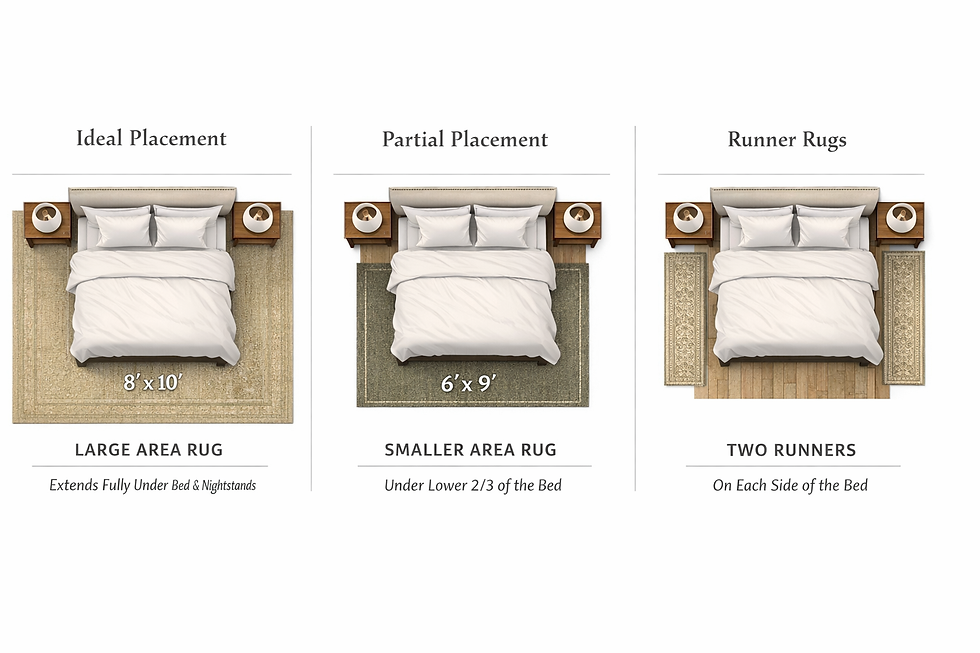
Bedroom Rug Sizes: Creating Warmth Without Overcrowding
Bedroom rugs should make the space feel cozy when you step out of bed—not cramped or awkward.
Best Bedroom Rug Options
Large Rug Under the Bed (Most Balanced Look)
Rug extends under the bed and nightstands
Visible on both sides and at the foot of the bed
Typical sizes:
Queen bed → 8' x 10'
King bed → 9' x 12'
Partial Rug Under the Bed (Space-Saving Option)
Rug starts under the lower two-thirds of the bed
Leaves floor exposed near the headboard
Runners on Each Side (Alternative for Tight Spaces)
Two matching runners placed on either side of the bed
Works well in narrow rooms or with wall-to-wall carpet
What to Avoid
Small rugs placed only at the foot of the bed
Rugs that don’t extend past the sides of the mattress
Entryway & Hallway Rugs: Function Comes First
Entry rugs work hard—they catch dirt, define the space, and set the tone for your home.
Entryway Rugs
Choose a rug that fills the entry zone without blocking door swing
Leave a small border of flooring visible for balance
Common sizes:
2' x 3' for very small entries
3' x 5' or 4' x 6' for standard foyers
Hallway Runners
Runner should leave 3–5 inches of floor visible on each side
Length should feel intentional—not stop short or crowd doorways
Kitchen Rugs & Runners: Practical and Proportional
Kitchen rugs should enhance comfort and protect floors without becoming obstacles.
Best Uses
Runners in galley kitchens
Mats in front of sinks or prep areas
Sizing tips:
Runner should be slightly shorter than the cabinet run
Avoid rugs that block appliance doors or create trip hazards
Rug Pads: The Missing Piece Most People Skip
A rug pad isn’t optional—it’s essential.
Benefits include:
Preventing slipping and bunching
Extending the life of the rug
Adding comfort and insulation
Choose a rug pad:
Slightly smaller than the rug itself
Appropriate for your flooring type
How to Test Rug Size Before Buying
Before committing:
Measure the room and furniture layout
Use painter’s tape to outline rug dimensions on the floor
Walk around the taped area and test furniture placement
This simple step can save you from an expensive sizing mistake.
When in Doubt, Size Up
If you’re torn between two rug sizes, choose the larger one. A properly sized rug makes a room feel bigger, more cohesive, and more intentional—while a rug that’s too small almost always looks like a compromise.
Rug size isn’t just a detail; it’s a foundational design decision that impacts how your entire room feels.
Affiliate Disclosure
This post may contain affiliate links, which means we may earn a small commission if you make a purchase through one of those links—at no additional cost to you.


Comments